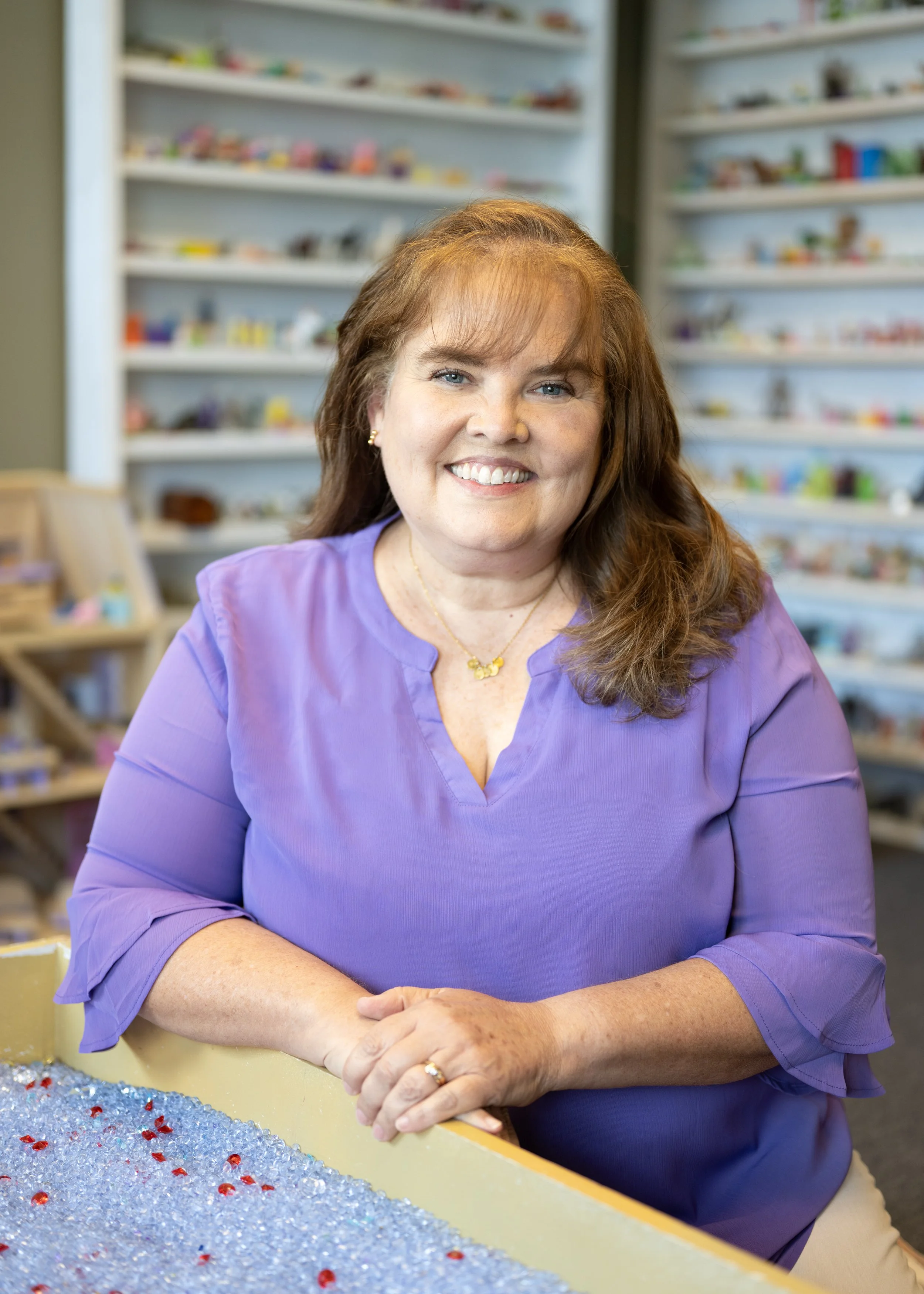
Angie Martin, M.Ed., LPC, RPT
Trauma, Play Therapy, Children, Adolescents, Individuals & Couples
Angie works with children, teens, adults, couples, and families, with particular specialties in trauma, play therapy, and adolescents experiencing intense emotions or difficult life experiences. Her approach is warm, steady, and relational, with the understanding that people do not have to walk into therapy already knowing exactly what is wrong or how to talk about it.
As a Registered Play Therapist, Angie uses play and developmentally appropriate approaches to help children express and process experiences that may be difficult to communicate with words. She has extensive experience working with children and families impacted by trauma, abuse, attachment disruptions, behavioral concerns, and significant family changes.
Trauma has been a central part of Angie’s clinical work throughout her career. Before joining Harbor, she worked as a therapist and child forensic interview specialist at a Children’s Advocacy Center. Her advanced training includes TraumaPlay™, Trauma-Focused Cognitive Behavioral Therapy (TF-CBT), attachment-based and neuroscience-informed play therapy, sandtray, self-injurious behaviors, and treatment approaches for children with problematic sexual behaviors.
Angie especially enjoys working with teenagers who may be overwhelmed, angry, withdrawn, anxious, self-harming, experiencing suicidal thoughts, or simply difficult for the adults around them to reach. She does not expect teenagers to arrive excited about therapy or immediately ready to talk. Building trust and creating an authentic relationship is part of the work. When suicidal thoughts or self-harm are present, Angie works with adolescents when outpatient therapy is clinically appropriate.
Angie also enjoys working with couples and offers a collaborative couples counseling model with Erica Smith, LPC (conveniently located down the hall). When appropriate, their approach combines joint couples sessions with coordinated individual sessions, allowing each partner space to understand their own experiences and patterns while keeping the health of the relationship at the center of treatment.
Angie believes therapy should feel human rather than scripted. She brings significant clinical training into the room without expecting clients to speak in clinical language. Her goal is to help people better understand themselves, strengthen important relationships, build resilience, and eventually carry what they have learned in therapy back into their everyday lives.